What is an artist's impression? Where they are used, and what makes one you can rely on
Artist impression meaning, the types used for DAs and off-the-plan sales, what the label doesn't promise under Australian law, and what one costs.
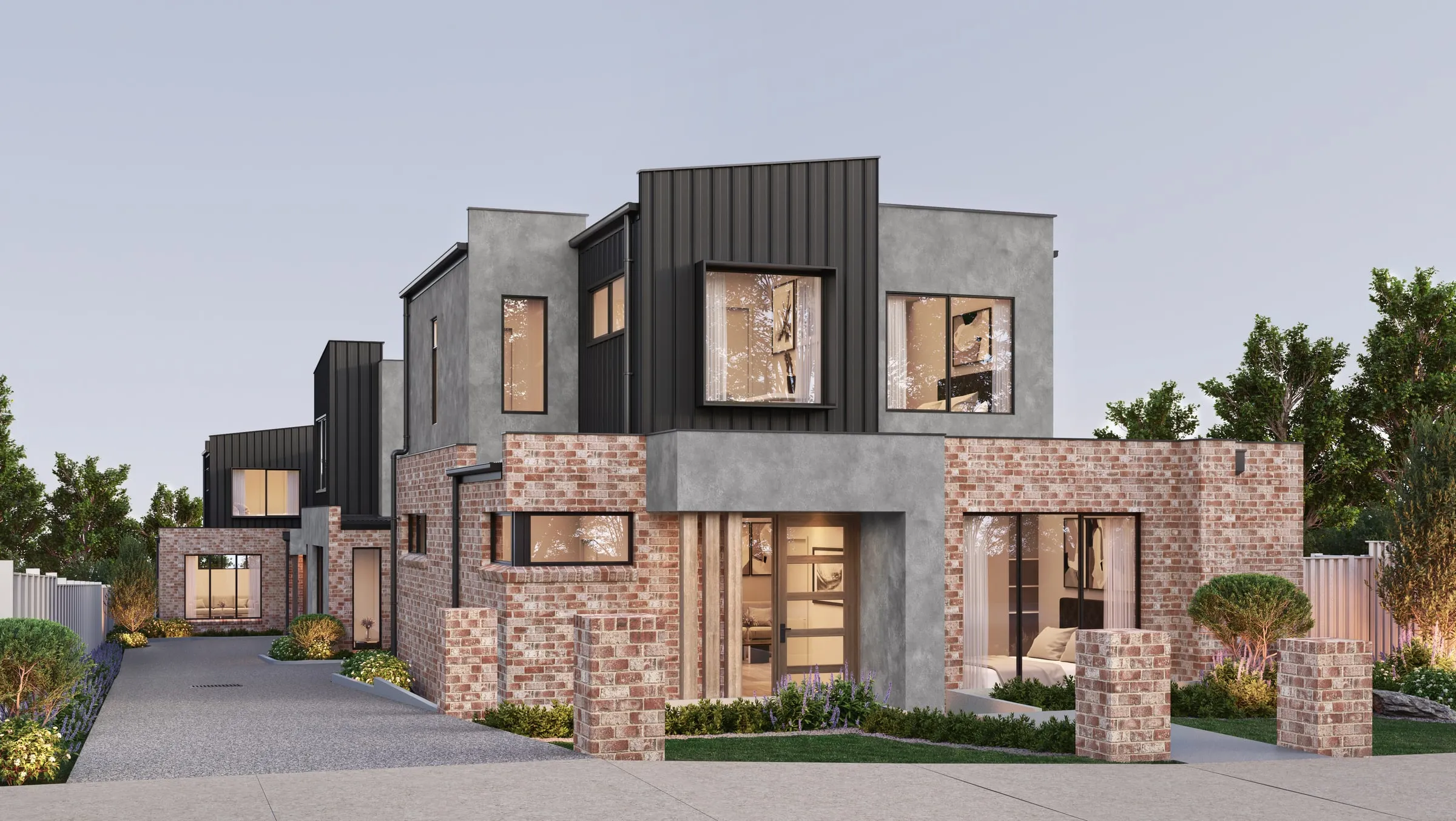
An artist’s impression (often written “artist impression”) is an image of a proposed building, drawn or rendered from its plans before construction, that shows what it will look like once finished. The words are printed under almost every such picture: on the hoarding, in the brochure, on the project website and in the planning documents. It means the same thing as a render, a CGI or an architectural visualisation (our guide to CGI and 3D rendering untangles the words).
The label tells the viewer that the image shows intent, not a finished building. It doesn’t give the image licence to show something the plans don’t.
Artist impression meaning
In its plain dictionary sense, an artist’s impression is “a sketch or drawing of someone or something, produced when it is not possible to take a photograph” (Wiktionary). In property, the thing that can’t be photographed yet is the building, so the image is made from its plans instead.
The phrase is older and wider than property. An artist’s impression, also called an artist’s conception or artist’s rendition, is any picture made when no photograph can exist: a planet around a distant star, a dinosaur, a spacecraft before it flies (Wikipedia). Architecture has its own literature on them, such as Bob Giddings and Margaret Horne’s Artists’ Impressions in Architectural Design (Taylor & Francis, 2004). In every case the label says the same thing: this is someone’s careful depiction of what can’t yet be seen, not a record of what is there.
“Artist impression only”, the line printed under many marketing images, means the picture is indicative. It shows the design as intended when the image was made, while the plans, the specification and the contract set out what is actually being sold. The words alone don’t excuse a picture that misleads, as the section on disclaimers below explains.
Where artist’s impressions are used
Planning. Development applications and panel presentations use them to show bulk, height and context from the places the public will see the building. Here accuracy matters more than atmosphere. See what planners actually want from your render.
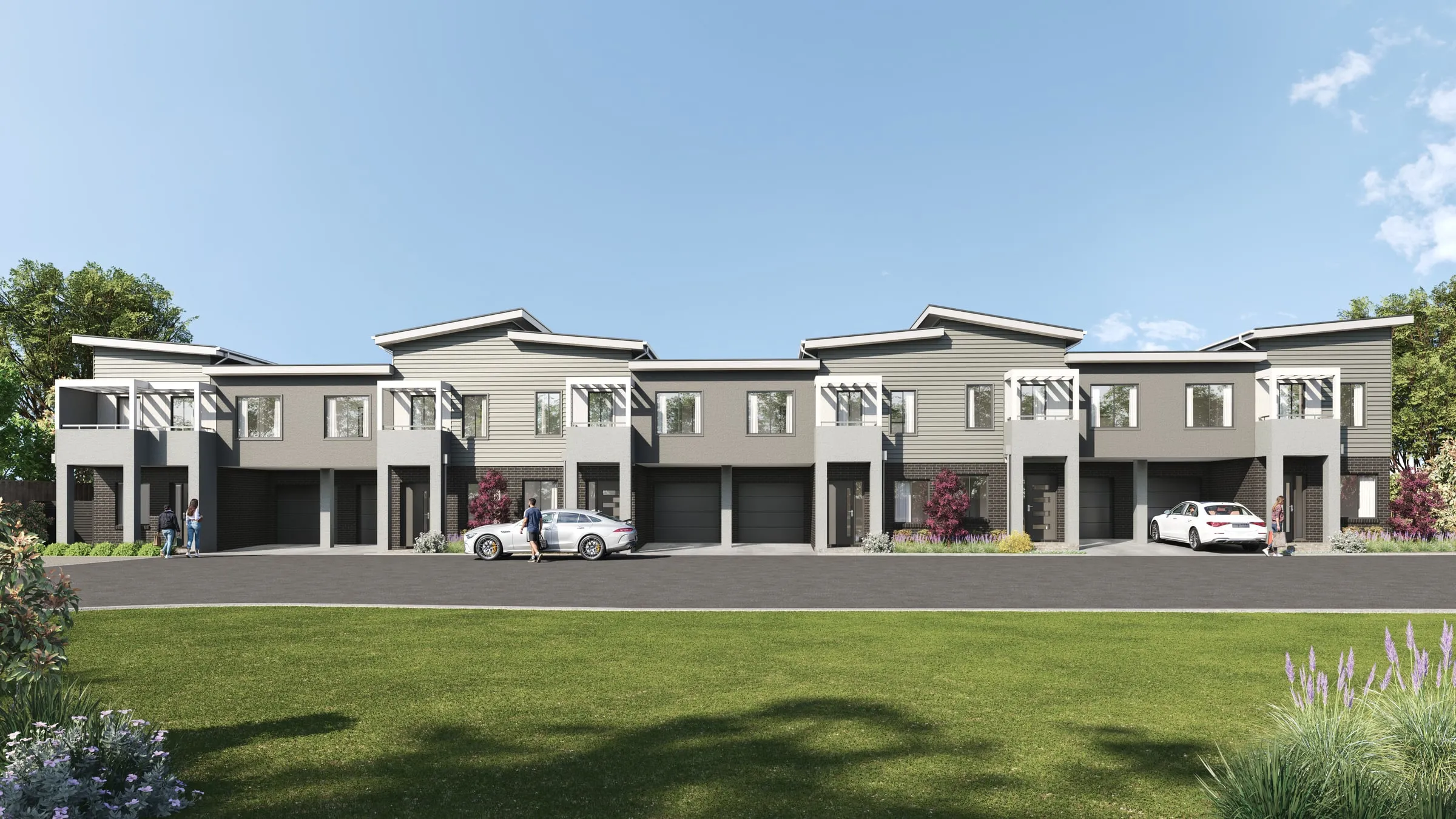
Off-the-plan sales. The campaign imagery buyers commit on: the hero exterior, the interiors, the outlook from real levels. Our guide to off-the-plan campaign imagery covers the set and the sequence, and the one on off-the-plan virtual tours covers the tour buyers walk through.
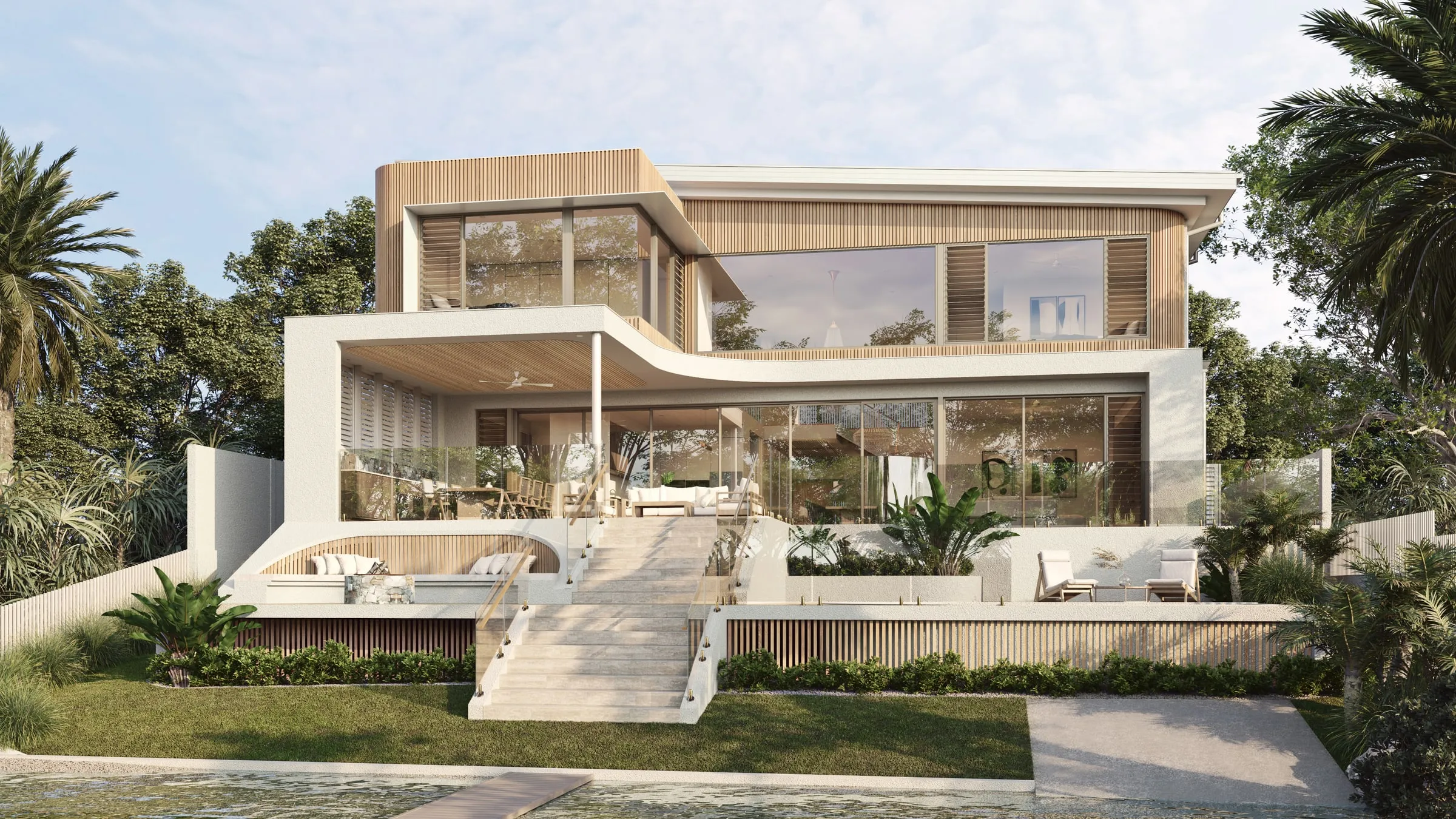
Hoardings and signage around the site, at sizes where every flaw shows. What resolution renders need has the numbers.
Design decisions. Client presentations, competition boards, and facade and finish options.
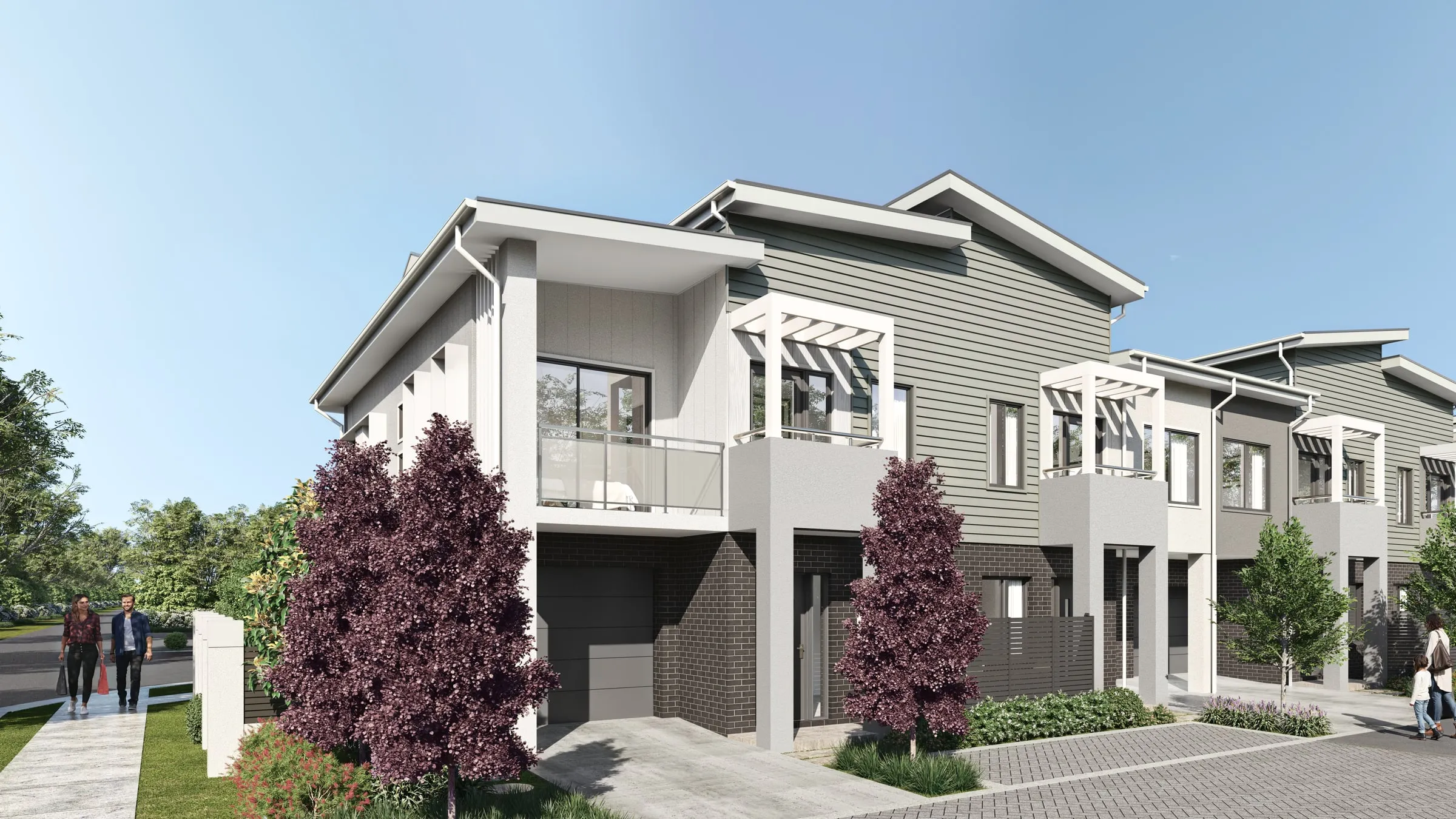
Types of artist’s impression, and where each one can mislead
Any kind of render can carry the label, and our guide to architectural rendering in Australia explains what each kind is. What differs from one to the next is where the label appears and what tends to go wrong.
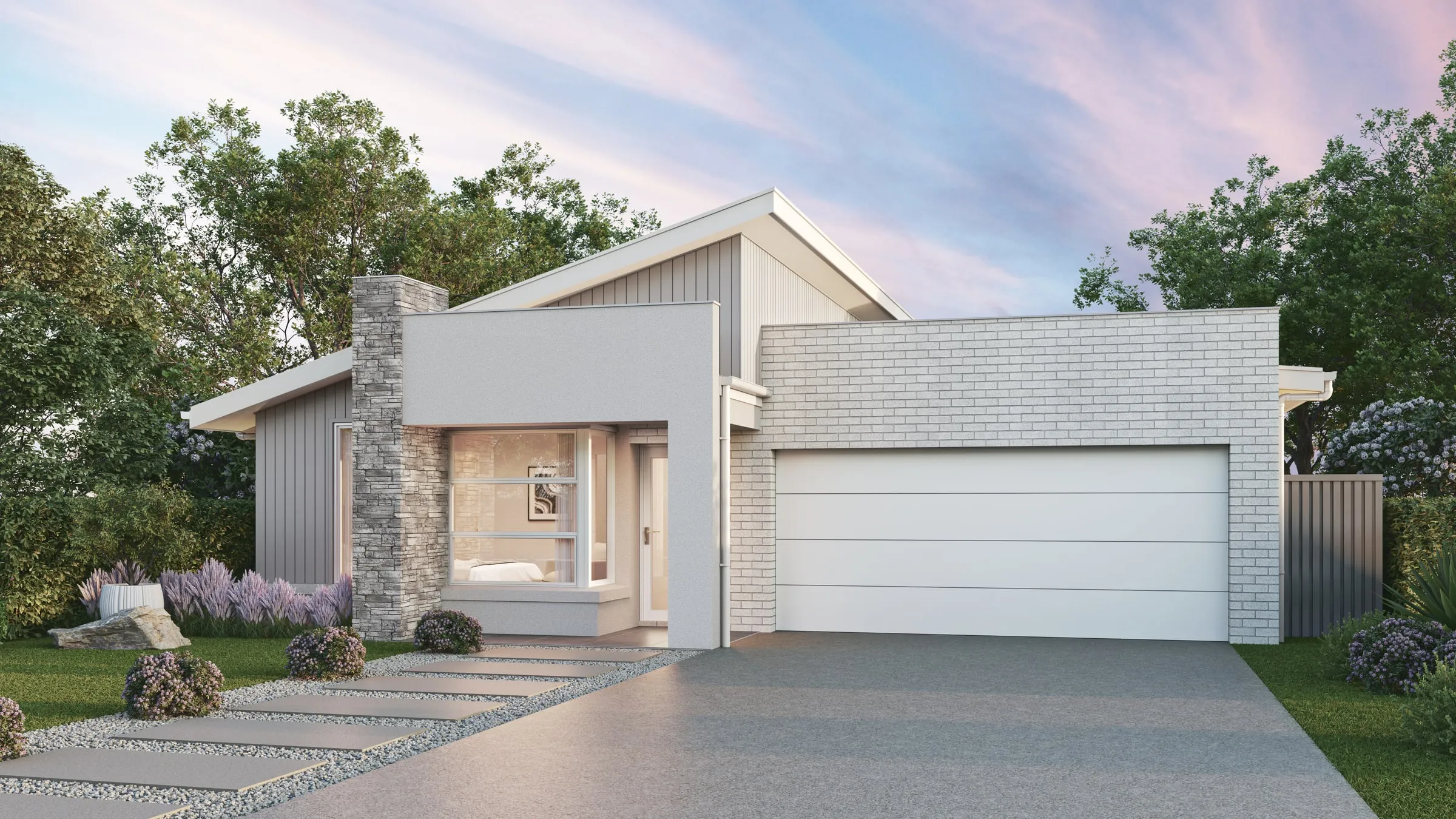
- Exterior. The image on the hoarding and the brochure cover, which neighbours and the council see as well as buyers. The usual faults are a camera hovering where no one could stand and a lens wide enough to make a tight site look generous; keep the hero view at eye height, from a spot a passer-by could stand on. See exterior visualisation.
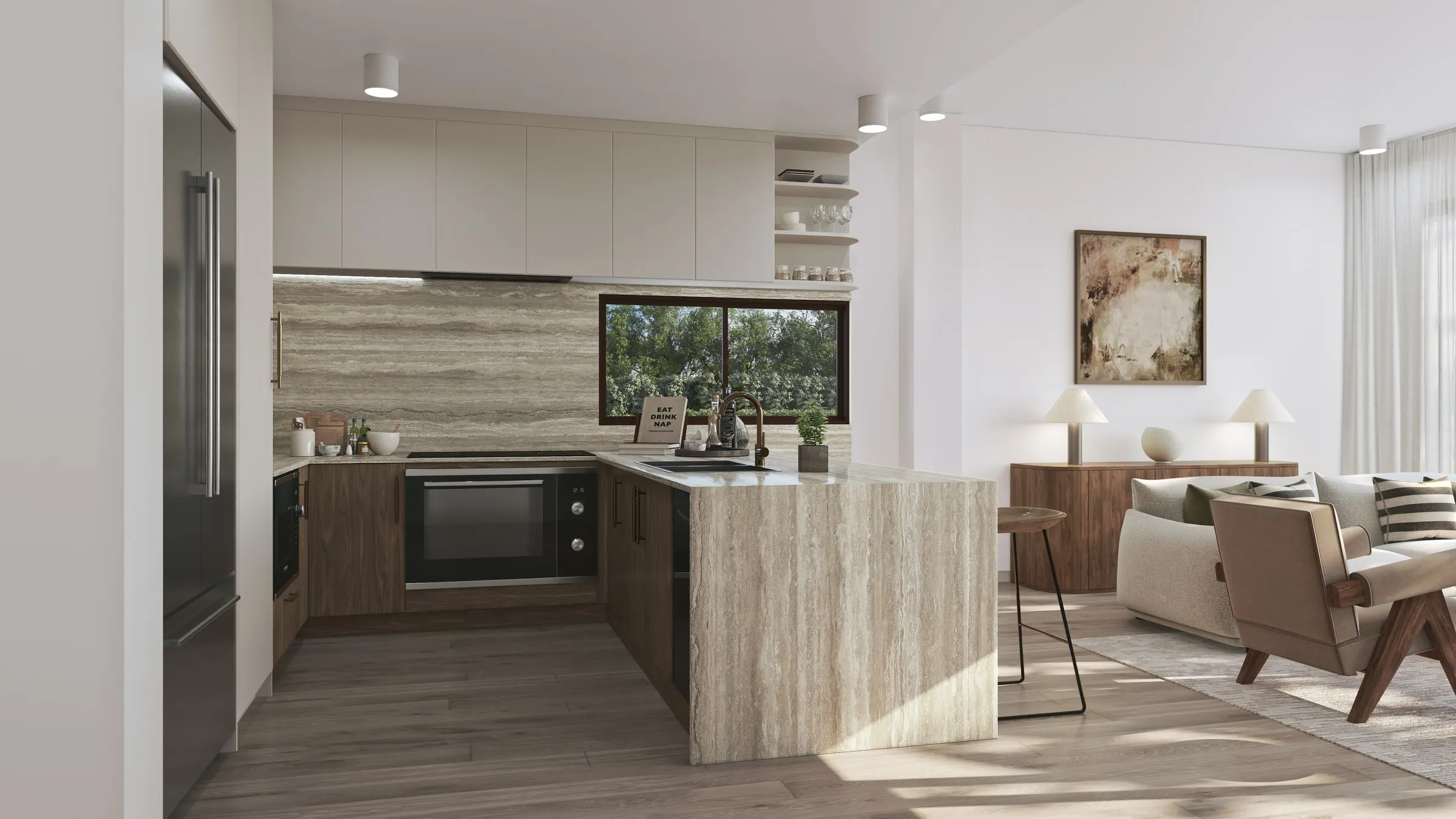
- Interior. The rooms in the off-the-plan brochure. In NSW, off-the-plan vendors have to provide a proposed schedule of finishes (NSW Government), and that is what the buyer will hold the picture against. An interior drifts when a stone, a tap or an appliance is upgraded for the image, or when a room is opened up further than the plans allow, like the opening at the centre of the Ripani case below. See interior visualisation.
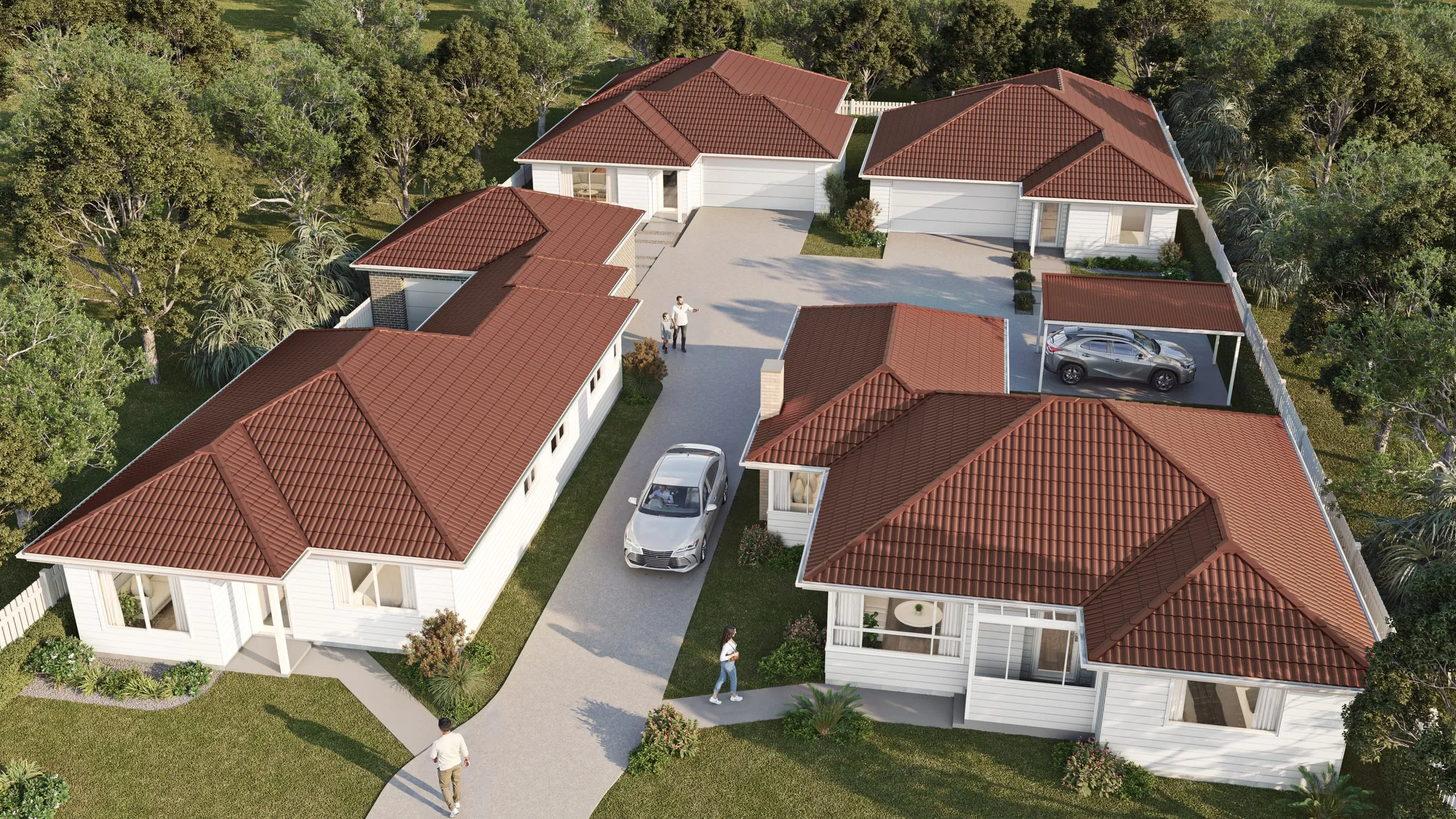
- Aerial and masterplan. The estate plan on the sales-office wall and in the land release brochure. It misleads when a park, a town centre or a later stage is drawn as if it already exists: show the stage on sale as it will be delivered, and label what is still only planned. See aerial and masterplan imagery, and our guide to the three kinds of aerial render.
- Film and tours. The display suite and the project website, where buyers walk the rooms and switch finishes for themselves. A tour invites a closer look than any still, because the buyer chooses where to stop, so every room, every view from a window and every finish scheme in it has to match the documents. See architectural animation and virtual tours.
- Photomontage. Less a sales image than evidence: the proposal set into a photograph of the actual site, for an assessor or a court. In NSW, a photomontage relied on in a Land and Environment Court appeal is held to the Court’s own policy, which asks for the original photograph and the camera’s accurate position and height to be provided with it (LEC, PPL-15). A montage made for a brochure, with the camera guessed and the building tidied, will not meet it; see our guide to that policy and, for Victoria, renders and photomontages at VCAT.
Artist’s impression examples
Three of the commonest jobs an artist’s impression does, each made from the documented drawings.
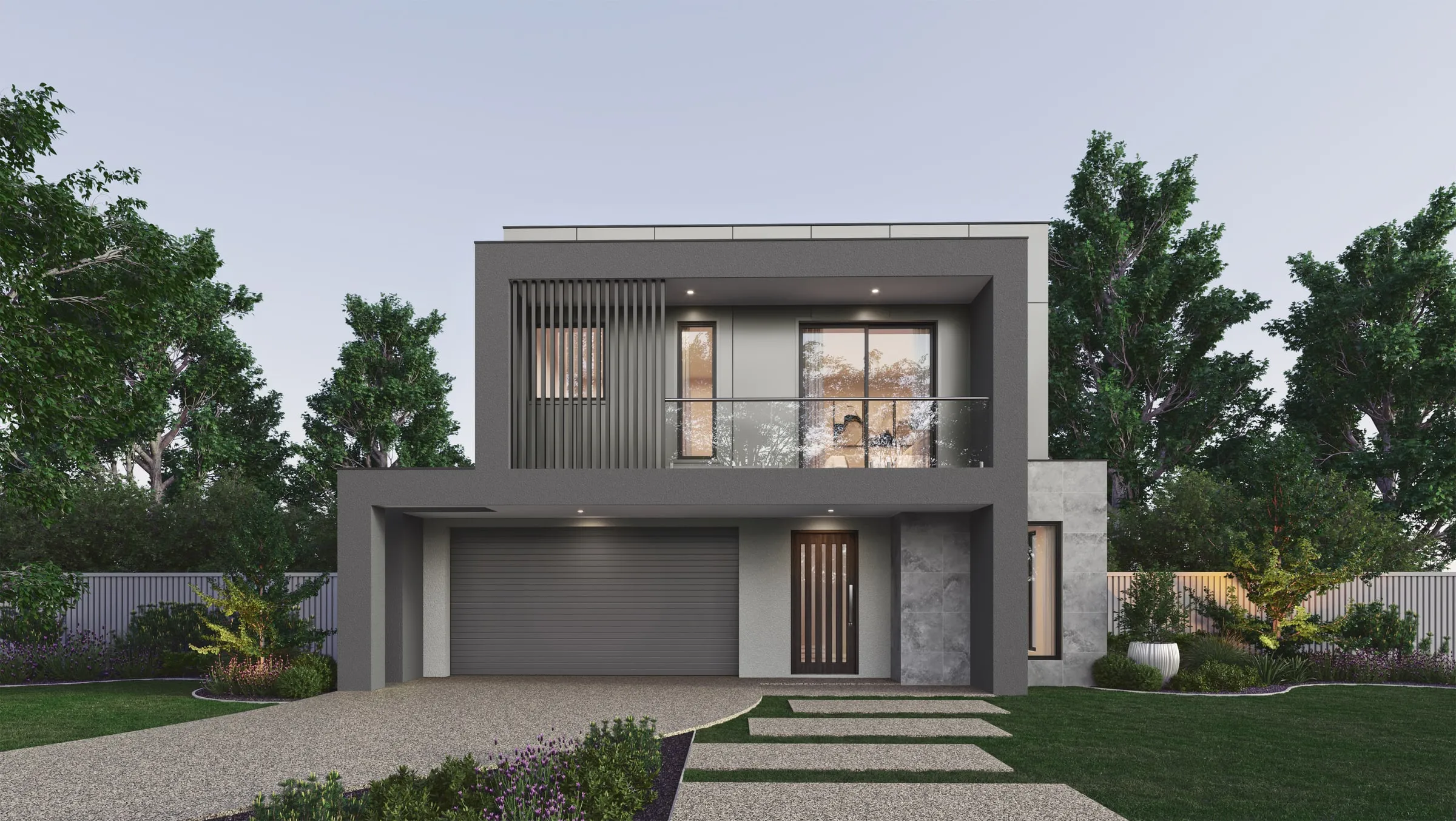
The dusk hero. The cover of the brochure and the face of the sign board: the house in evening light with its windows lit, so the materials and the depth of the facade read at a glance. The time of day is a choice; the building, its finishes and its setbacks are still the ones in the plans.
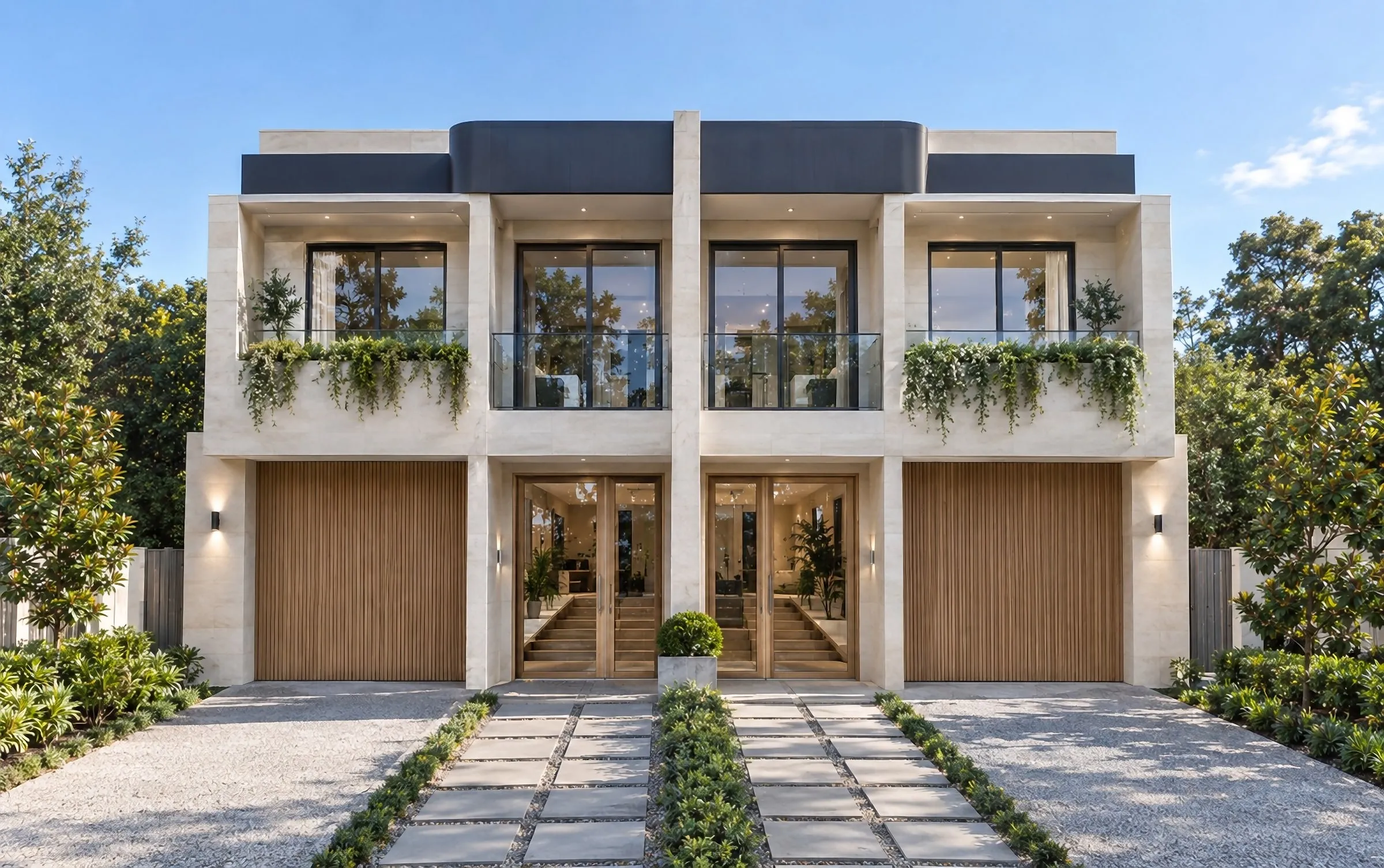
The street view for a release. A duplex as a passer-by would see it, from the footpath at eye height, with the driveways, front paths and planting as they will be built. Buyers of attached homes ask how the pair sits together and against the street, and this is the view that answers them.
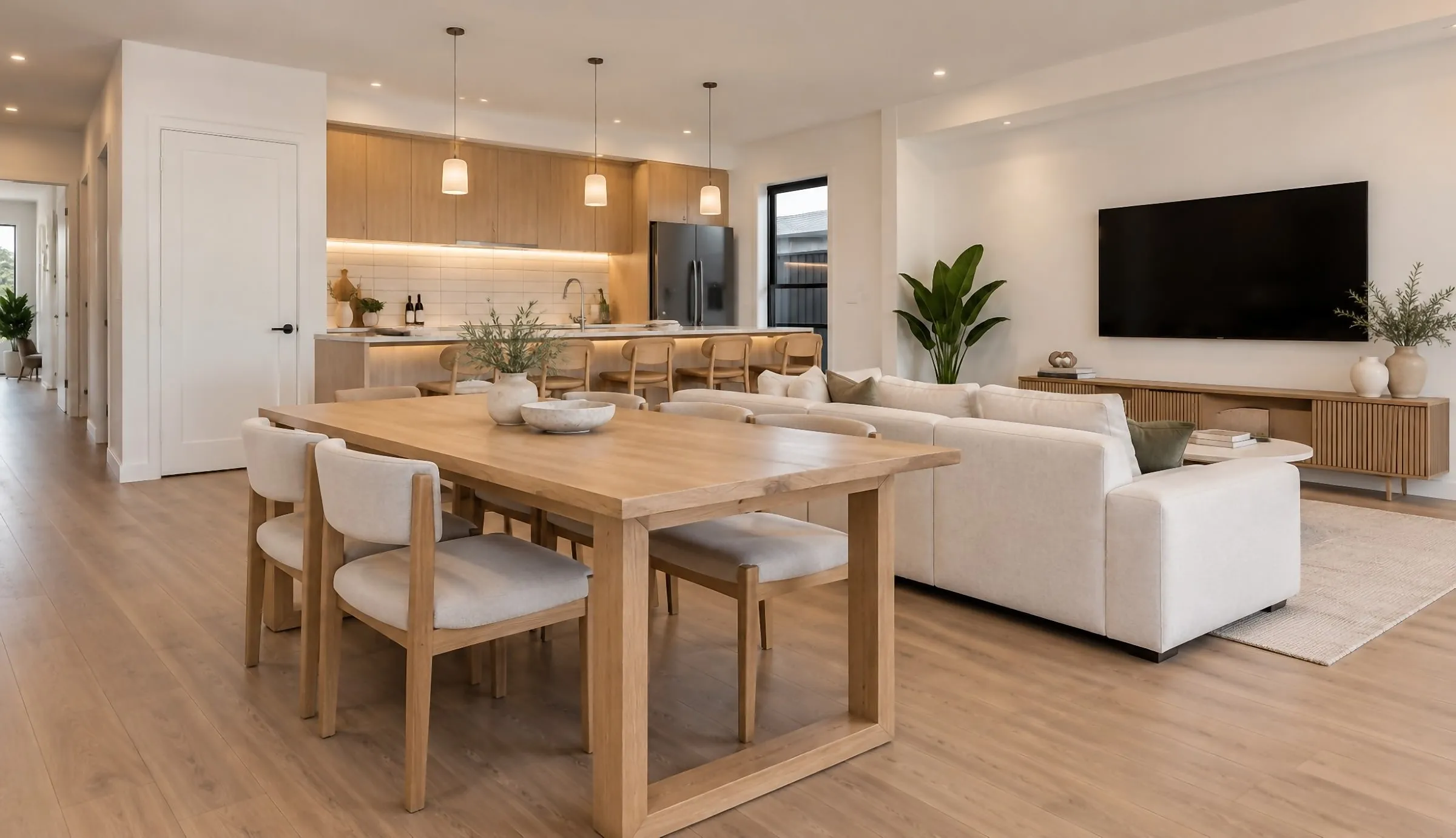
The brochure interior. The living and dining room in the proposed schedule of finishes, furnished so the size of the room can be judged. Off-the-plan buyers compare it with the finishes schedule in the contract, so the two have to match.
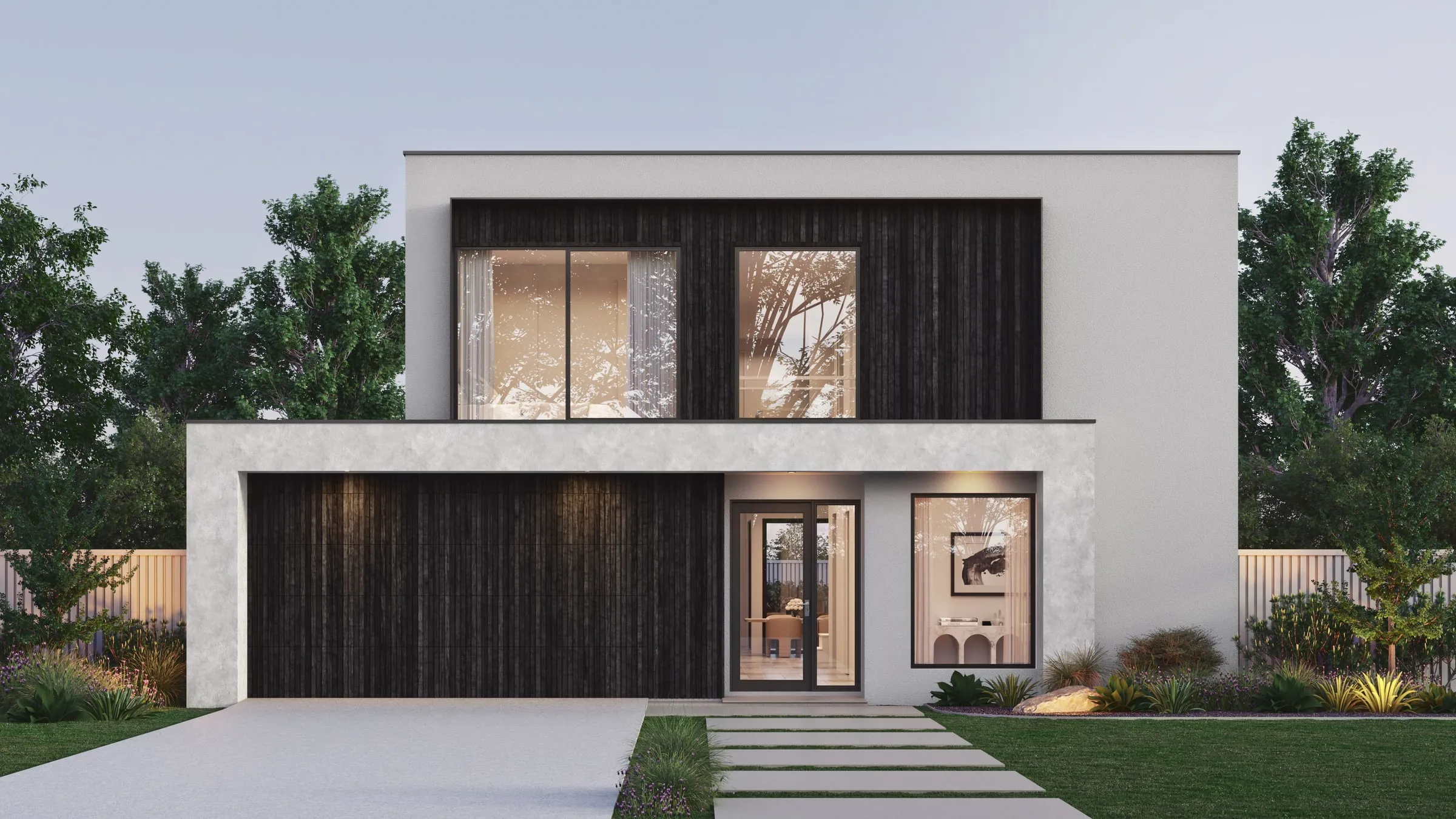
Artist impression disclaimers: what the label does not cover
The Australian Consumer Law prohibits misleading or deceptive conduct (section 18), and small print doesn’t change what an image tells a buyer.
In Ripani v Century Legend Pty Ltd [2022] FCA 242, the Federal Court found that a developer’s “hero render” of an off-the-plan apartment, showing a seamless, free-span opening from the living area to the terrace that could not be built to look like that, was misleading, and that the brochure’s “indicative only” wording, on page 96, did not save it. The developer appealed. The Full Court allowed the appeal, set those orders aside and ordered a new trial on a narrower question: whether the buyers kept relying on the render after they were allegedly told about the problem ([2022] FCAFC 191). It did not accept the developer’s arguments about the disclaimers.
This isn’t legal advice, and the case shows how long a dispute over one image can run. The practical lesson for anyone commissioning an artist’s impression is simple: the image should show something the plans can deliver. The same goes for photos edited or generated with AI, and NSW will soon require some of them to be disclosed in rental ads: see AI-generated and digitally altered property images.
What makes an artist’s impression you can rely on
- The building as drawn. Nothing in the image that isn’t in the plans: no wider openings, extra glazing or thinner slabs than the documents show.
- Finishes as specified. Named products, rendered the way the real product behaves, not a stone that happens to photograph well.
- The real context. Neighbouring buildings from survey, the actual street, and the outlook from the actual level and orientation. Not one hero view reused for every apartment.
- Honest landscaping. Planting at a size the landscape plan can deliver. If the image shows the trees fully grown, say so.
- True light. Sun angles for the real orientation, so a courtyard that never gets afternoon sun isn’t shown bathed in it.
- Styling that helps rather than hides. Furniture, people and cars that show scale and use, without covering the parts of the design that matter.
How one is made, and what it costs
The building is modelled from the drawings, together with its site and neighbours (3D modelling and rendering, explained). The camera and light are agreed on a plain grey model before any materials go on, because that is the cheapest decision to change. Then come finishes, landscaping and styling, one consolidated round of comments, and the final render and grade. How we work sets out the stages. If your drawings are incomplete, see what a studio has to assume without them.
Once the drawings are settled, a single image typically takes three to four business days. An exterior or interior starts from $1,000 plus GST and an aerial from $1,900 plus GST (see our prices), and what architectural rendering costs explains the wider range across the market.
Artist’s impression, render or CGI?
Same thing, different habits. Architects tend to say visualisation, property marketing tends to say artist’s impression or CGI, and most people simply say render. What matters is not the word on the label but whether the picture matches the plans. The term’s dictionary meaning, and its uses outside property, are covered at the top of this guide.
Planning a campaign or a submission? Send us the drawings — you will have a fixed price, a written scope and a delivery date within two business hours. Or see our real estate marketing package, exterior visualisation, our prices and the starting prices other Australian studios publish, in our price survey.