How to choose a visualisation studio: nine questions to ask first
Every studio’s portfolio looks good. What decides a project is the process — nine questions that expose it, and the answers to be wary of.
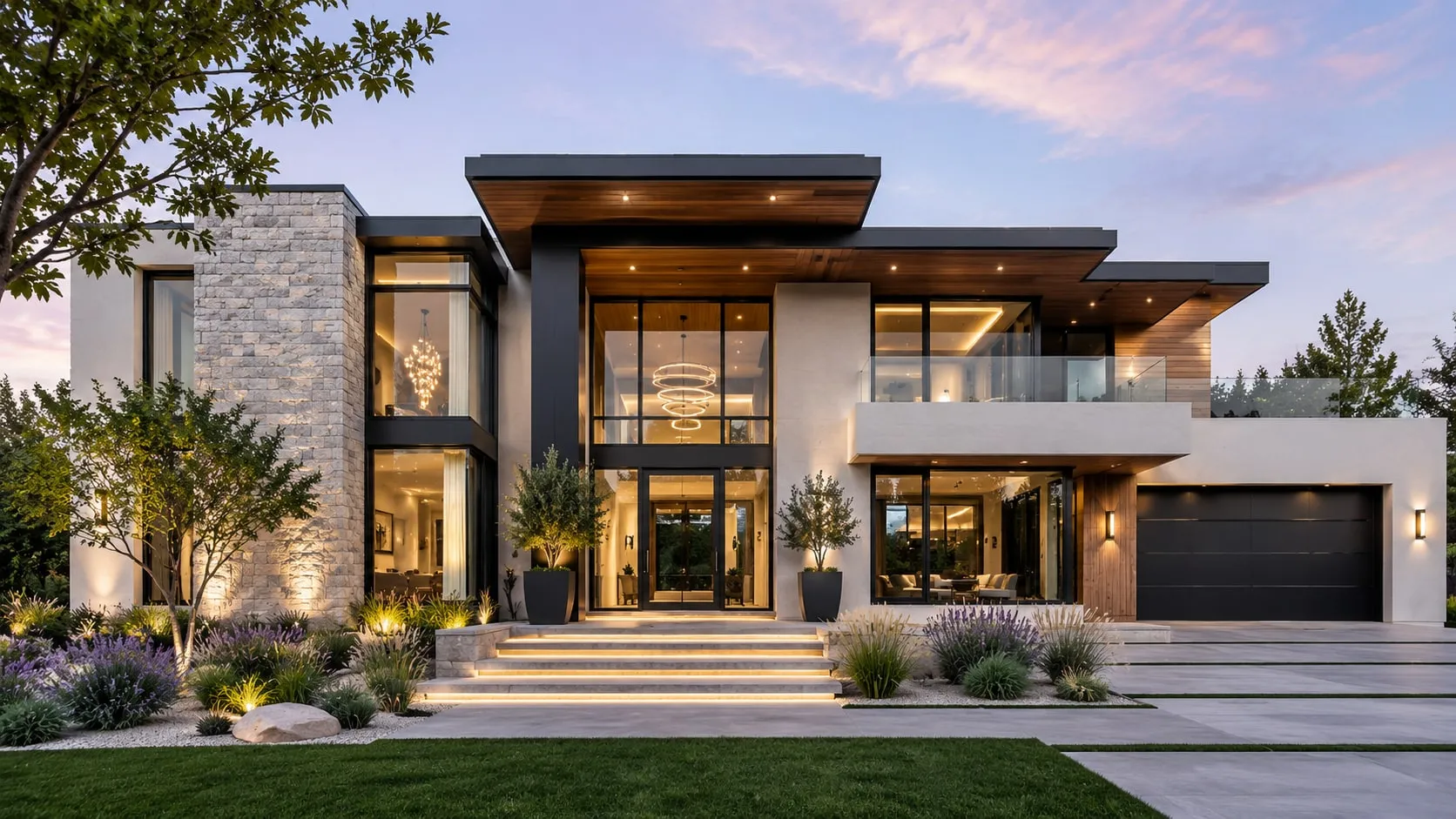
Every studio’s portfolio looks good. It is the one thing a studio controls completely: the best dozen images from hundreds of projects, often from years ago, sometimes made by artists who have since left.
What a portfolio cannot show you is how the work gets made — and that is where projects go wrong. Late delivery, revision rounds that multiply, an image that does not match the drawings, a planning image that gets picked apart. Those failures come from process, not talent.
So ask about the process. These nine questions will tell you more than any portfolio.
1. Will you give me a fixed price, a scope and a date before anything starts?
A capable studio can price a project from drawings and a sentence about what the image is for. If the answer is an hourly rate, a range, or “let’s get on a call first”, you are at the start of a sales process, not a project.
Be wary of prices that do not say what they include: resolution, number of views, revision rounds and turnaround. Studios that publish prices state them in very different ways; our price survey sets the published starting prices side by side, with the deliverable and unit each price is for.
2. Who will actually work on my project?
Some studios sell with senior work and deliver with junior artists, or pass the job to a production team elsewhere without saying so. Neither is automatically bad, but you should know. Ask who builds the model, who lights it and who grades it — and whether one person carries it from start to finish. Ask, too, whether the building is modelled from your drawings.
3. When do I approve the camera and the lighting?
This is the question that predicts revision cycles. Composition and lighting should be agreed on a simple grey-box model, before anyone spends hours on materials. A studio that shows you a finished image first and then asks what you think is setting both of you up for expensive rounds.
4. Are the materials real?
“Dark brick” rendered from a library texture is not your brick. Ask whether the studio can match the named products in your finishes schedule — from a scanned library, from manufacturer data or from a physical sample — or whether it will approximate.
5. Is the surrounding context real?
For planning work especially, ask how the neighbouring buildings are modelled. The right answer is from survey, cadastral data and site photography. An invented context is quicker to make, and it is the first thing an objector checks.
6. How do revisions work, and what is included?
“Unlimited revisions” usually means the process is not controlled, and you pay for that in time. Look for a defined number of rounds, set out in the quote, at defined stages — and a process designed to make most of them unnecessary.
7. Can one scene serve more than one use?
If your project needs planning imagery now and marketing imagery later, the model built for one should serve the other. Ask whether the studio will build for both from the start. It is the single biggest saving available, and most buyers never ask.
8. What do you need from me?
A studio that asks for a site plan with a north point, a finishes schedule and where the image will be used is thinking about your result. One that only asks for “the drawings” is going to guess — and guesses are what revision rounds are made of.
9. Will you tell me when I do not need you?
This one is revealing. Not every image needs the premium tier: a straightforward compliance image usually does not. A studio that will say so, and point you somewhere cheaper, is one whose advice you can trust when it says an image does need the extra care.
Boutique studio or large studio?
Neither is better in general; they are built for different jobs. A boutique studio keeps its book of work small, so the same senior person usually stays on your images from the first model to the final grade. That suits a one-off custom home, an architect whose design lives in its details, and planning images that may be questioned and have to stand up — work where a call made in the first week still matters in the fourth.
A large studio is built for capacity. It suits a big volume of images due on one fixed date, many projects running side by side, and teams in several time zones that can keep work moving around the clock. The trade-off is usually more hand-offs between people, so ask who will answer for your images at each stage.
Either way, the nine questions above still apply. We are a boutique studio ourselves: we cap how many projects we take on at once.
Comparing quotes fairly
When the quotes arrive, line them up on the same terms:
- Resolution — 4K and print resolution are not the same thing as “HD”.
- Views — how many camera angles are explored before one is chosen.
- Revisions — how many rounds, and at which stages.
- Turnaround — a date, not “about two weeks”.
- Files — web and print exports, layered files, formats.
- Scope — styling, landscape and surrounding context: included, or extra?
The cheapest quote is often the one that has quietly left something out.
What protects you in Australia
Under the Australian Consumer Law, a business that buys a service for less than $100,000 including GST is covered by the consumer guarantees, so a render commission under that amount comes with them. The work must be done with due care and skill, be fit for any purpose you told the studio about, and be delivered within a reasonable time if no date was agreed.
That is one more reason to put the sentence about what the images are for in writing. If an image can’t be used for a purpose you told the studio about, and can’t easily be fixed within a reasonable time, the ACCC treats it as a major problem: you can cancel and get a refund, less a reasonable amount for the work already done, or keep the work and pay a lower price. A minor problem the studio must fix for free.
General information only, not legal advice.
Sources, checked October 2026: ACCC, Consumer rights and guarantees; ACCC, Repair, replace, refund, cancel.
The short version
Judge the portfolio by the work you would actually commission — your building type, at your level. Then judge the studio on its process: a fixed price, a named artist, camera approval before materials, real materials and context, and the honesty to say when you do not need it.
We publish our pricing and our process because these are the questions we would want answered ourselves. If you have a project in mind, send us the drawings and a sentence about what the images are for.